Financial Recovery & Debt Repair Guide
Comprehensive 1,000+ word financial recovery guide offering step-by-step debt management strategies, legal protections, budgeting advice, and asset security.
💰 Responsible Financial Disclaimer
This guide provides educational information regarding financial stabilization and debt management. Satta Fast King does not offer financial loans or investment services. If you are experiencing acute debt distress, consult a certified financial advisor or legal counsel.
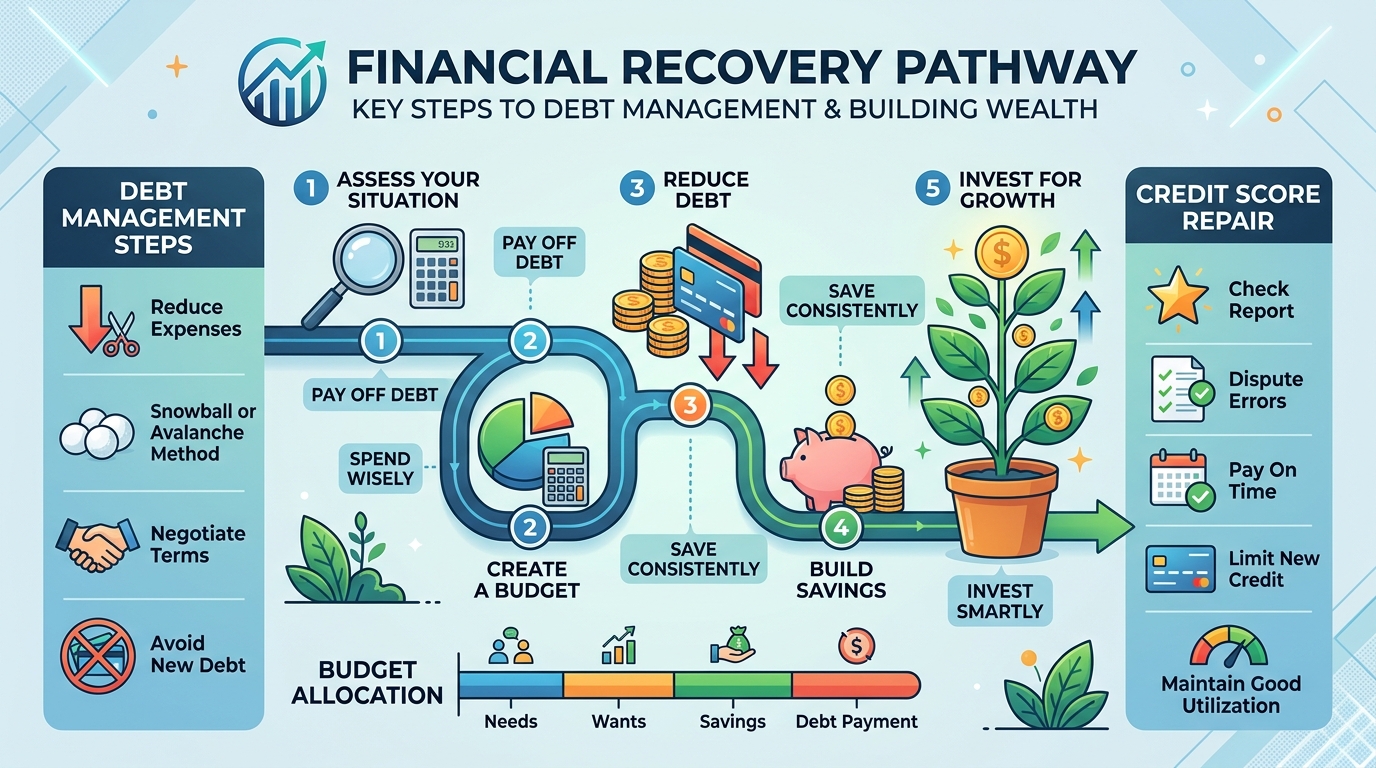
Step-by-Step Blueprint for Financial Recovery After Losses
Experiencing financial losses from compulsive participation in markets like Disawar Satta Chart, Gali Satta Chart, or Satta King Chart 2026 can feel overwhelming. However, financial recovery is completely achievable through disciplined, systematic steps.
Step 1: Stopping the Financial Bleeding Immediately
Before you can repair your finances, you must eliminate all avenues for further capital loss:
- Transfer Financial Custodianship: Entrust control of online banking, debit cards, and UPI apps to a trusted relative.
- Deactivate Credit Lines: Close instant digital loan apps, credit card cash advances, and overdraft facilities.
- Enforce Daily Bank Limits: Lower your daily bank transfer limits with your primary bank branch.
Explore behavioral strategies to maintain this lockout on our How to Quit Satta Guide and 15 Tips to Stop Gambling.
Step 2: Conducting a Full Debt Audit
Facing the exact numbers is crucial. Create a detailed spreadsheet or document listing all liabilities in order of priority:
- Essential Secured Debts: Home mortgages, vehicle loans, and essential utility bills (highest priority to prevent asset loss).
- High-Interest Unsecured Debts: Credit card balances and personal loans carrying high interest rates.
- Informal Loans: Money borrowed from friends, family, or colleagues.
Step 3: Communicating with Lenders & Legal Protections in India
If you are struggling to make loan repayments, proactive communication is essential:
- Request Debt Restructuring: Contact formal banking institutions to request an extended tenure or reduced EMI obligations under Reserve Bank of India (RBI) guidelines. Visit the RBI Official Website.
- Protection Against Illegal Harassment: Under RBI guidelines, recovery agents cannot use physical intimidation, abusive language, or visit debtors at unpermitted hours. If you face harassment from illegal loan apps, file an immediate complaint at 1930 via the National Cyber Crime Reporting Portal.
- Free Legal Services: Eligible citizens can access free legal advice through the National Legal Services Authority (NALSA).
Step 4: Implementing an Emergency Envelope Budget
Adopt a strict cash flow budget focusing exclusively on basic necessities (Food, Utilities, Shelter, Health):
| Budget Category | Target Allocation (%) | Primary Purpose | Action Directive |
|---|---|---|---|
| Essential Living Expenses | 50% - 60% | Rent, groceries, utilities, medical care | Strict priority; non-negotiable |
| Structured Debt Servicing | 30% - 40% | Negotiated EMI repayments to lenders | Automate payments to avoid defaults |
| Emergency Fund Reserve | 5% - 10% | Build ₹10,000 liquid safety buffer | Keep in separate non-UPI account |
Step 5: Long-Term Rebuilding of Wealth & Credit Score
Rebuilding your credit score and financial stability takes time and consistency:
- Maintain Timely EMI Payments: Consistent, small debt repayments gradually repair your CIBIL score.
- Avoid High-Risk Speculation: Focus on legitimate, low-risk wealth building such as recurring deposits (RD) or systematic investment plans (SIP). Learn mathematical realities on our Satta vs Matka Mechanics Guide.
- Seek Professional Financial Counselling: Consult certified financial planners or reach out for psychological support via our Gambling Addiction Helpline Directory.
Official Legal & Financial Authority References
- Reserve Bank of India (RBI): Financial Education & Consumer Ombudsman at rbi.org.in.
- National Legal Services Authority (NALSA): Free legal assistance at nalsa.gov.in.
- National Cyber Crime Portal: Report fraudulent apps at 1930 or cybercrime.gov.in.
- Tele-MANAS Helpline: Call 14416 for mental health support during financial stress.
Frequently Asked Questions (FAQ)
Q1: What should I do first if I am in heavy debt from Satta?
Answer: Stop playing immediately, transfer control of your bank accounts to a family member, and perform a full debt audit. Contact lenders to negotiate manageable repayment schedules.
Q2: Can banks file criminal charges for defaulted personal loans?
Answer: Defaulting on a personal loan is generally a civil matter, not a criminal one. However, bouncing a cheque (Section 138 of the Negotiable Instruments Act) carries legal consequences. Consult legal experts via NALSA or legal counsel.
Q3: Where can I get free psychological support for financial stress?
Answer: Call the government toll-free helpline Tele-MANAS at 14416 to speak with professional mental health counselors.